%20Devum%20Logo.svg "(D) Devum Logo")


Machines generate thousands of signals every second. Yet many decisions still depend on spreadsheets, delayed reports, and fragmented systems. Industrial organisations have invested heavily in automation, but few have mastered the ability to transform machine data into actionable insights that drive decisions in real time. In this article we will be discussing.
What does Real-time Digital Intelligence mean in the Industrial Sector?
Real-time digital intelligence is the ability to transform live machine and operational data into actionable insights that enable organisations to understand what is happening, make informed decisions, and respond at the right moment.
Industrial organisations generate vast amounts of data from machines, sensors, SCADA systems, and enterprise applications. The real challenge is not collecting this data, but turning it into timely actions that improve operational outcomes. This shift moves organisations from reactive reporting to proactive decision-making.
At its core, real-time digital intelligence is built on four essential pillars:
-
Context: Raw machine data becomes meaningful when linked to business objectives, production targets, and operational priorities.
-
Visibility: Dashboards, alerts, and role-based experiences provide stakeholders with a clear, real-time view of operations.
-
Intelligence: Analytics uncover patterns, anomalies, and emerging issues, helping teams anticipate problems before they escalate.
-
Action: Insights create value only when they trigger responses, such as workflows, notifications, corrective measures, or process optimisation.
Together, these capabilities enable industrial organisations to move beyond monitoring events to understanding what they mean, determining what should happen next, and acting with confidence.
 What are the Hidden Costs of Delayed Decisions?
In machine-intensive industries, operational disruptions often stem not from equipment failures, but from delayed decision-making. Despite having access to vast amounts of machine and operational data, many organisations still rely on disconnected systems, manual updates, and periodic reports. By the time critical information reaches decision-makers, the opportunity to act has often passed.
Consider a haul truck operating with an overheating gearbox during a production shift. While temperature and vibration sensors may detect the anomaly early, the information often remains buried within operational systems or delayed reports. In several mining environments, similar issues have escalated over multiple shifts before maintenance teams were alerted, resulting in avoidable downtime, production delays, and higher repair costs.
The consequences extend beyond equipment failures. Production bottlenecks can lead to missed targets, maintenance teams are forced into reactive interventions, and opportunities to optimise operations often go unnoticed because the right insights are not available at the right time.
The challenge is not a lack of data, but the ability to turn data into timely action. Organisations that can shorten the gap between operational events and business responses gain a significant advantage through improved productivity, stronger operational resilience, and faster, more informed decision-making.
Why Traditional Approaches Fall Short?
Many industrial organisations still rely on disconnected systems, spreadsheets, static dashboards, and periodic reports to manage operations. While these tools provide visibility into individual processes, they rarely deliver a unified, real-time view of the business.
Machine data often remains trapped across SCADA systems, ERP platforms, and other applications, forcing teams to manually reconcile information and react only after problems have occurred. Large integration projects further slow innovation through lengthy deployments and specialised development requirements.
The result is decision latency. Delayed responses lead to production losses, avoidable downtime, higher maintenance costs, and missed opportunities for optimisation. In today's fast-moving industrial environments, organisations cannot afford to rely on hindsight. Competitive advantage depends on the ability to connect data, generate timely insights, and act before small issues become major disruptions.
From Machine Data to Actionable Insights: The New Industrial Imperative
Industrial Operation is entering a new era where success depends not only on collecting data, but on acting on it in real time. Organisations increasingly need platforms that bridge operational technology and enterprise decision-making, transforming machine signals into meaningful business outcomes.
To achieve this, industrial organisations need systems that can:
-
Capture machine events as they happen to provide an accurate view of operations in real time.
-
Apply business context to operational data so that raw signals become relevant and actionable information.
-
Deliver insights that stakeholders can understand through intuitive dashboards, alerts, and visual experiences.
-
Trigger timely responses by enabling notifications, workflows, approvals, and corrective actions before issues escalate.
-
Support continuous improvement by identifying patterns, uncovering inefficiencies, and enabling ongoing optimisation across processes.
The organisations that thrive will be those that move beyond simply monitoring operations to orchestrating intelligent action. Turning machine data into actionable insights enables faster decisions, greater agility, and a sustainable competitive advantage in an increasingly dynamic industrial landscape.
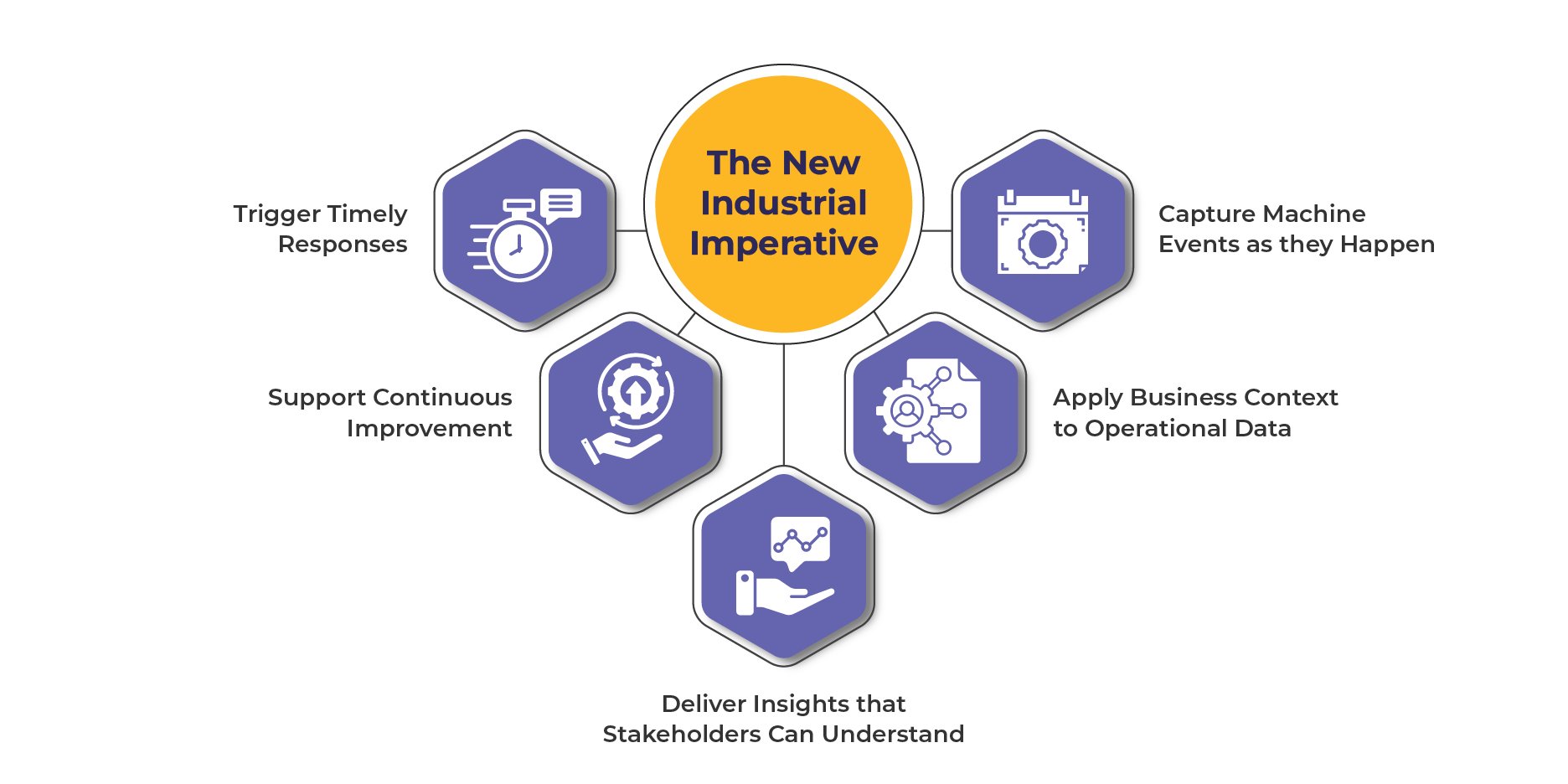
Figure 1: From Machine Data to Actionable Insights: The New Industrial Imperative
How Devum™ Bridges the IT/OT Gap?
Industrial organisations often operate with a disconnect between Operational Technology (OT) and Information Technology (IT). Machines, PLCs, sensors, and SCADA systems generate valuable operational data, while ERP and enterprise applications support planning and business decisions. When these systems remain isolated, organisations struggle with fragmented information, manual processes, and delayed responses.
Devum™ bridges this gap by combining low-code agility with industrial connectivity and orchestration capabilities. As an Industrial Application Development Platform (IADP), it enables organisations to connect operational and enterprise systems without replacing existing investments, creating a unified flow of information across the business.
By integrating machine data, industrial systems, enterprise applications, and workflows into a single platform, Devum™ transforms operational data into actionable business intelligence. This enables organisations to contextualise real-time events, automate responses, and make faster, more informed decisions that improve reliability, efficiency, and operational performance.
The following example demonstrates how this approach delivers measurable business outcomes.
Real-Time Fleet Optimisation: Guiding the Next Best Action
The following example is based on operational scenarios observed during a Devum™ deployment in a mining environment, where real-time visibility and intelligent decision support were used to optimise fleet movement and improve operational efficiency.
The Challenge
In mining operations, dispatch decisions are often based on proximity rather than real-time operational conditions. A haul truck that has completed unloading is typically directed to the nearest loading zone, even when that location may already be experiencing congestion.
In one such case we the client often came across a situation where loading zone A had several trucks waiting in queue, while loading zone B, located slightly farther away, had available loading capacity. Without real-time visibility, the truck is likely to join the queue at Zone A, increasing idle time and reducing fleet productivity.
How Devum™ Responded
Devum continuously analysed live operational data, including truck locations, queue lengths, equipment availability, loading cycle times, and production priorities.
By contextualising this information against operational goals, Devum determined the next best action in real time. In this scenario, the platform identified that redirecting the truck to Loading Zone B would result in a shorter overall cycle time, despite the additional travel distance.
The recommendation was delivered immediately to dispatchers or operators, enabling faster and more informed decisions.
Business Impact
By dynamically balancing fleet movement across loading zones, mining operations can:
-
Lower unnecessary fuel consumption caused by idling and queuing
-
Increase material movement and overall site throughput
Instead of relying on static rules or operator assumptions, Devum™ enables decisions based on current operating conditions, helping organisations maximise productivity while maintaining operational agility.
Devum™ also enables organisations to build interactive 3D digital twins of mines, plants, and industrial facilities. By combining live operational data with a visual representation of physical assets, users can view equipment status, production metrics, fleet movements, and other critical data layers in real time. This provides a more intuitive way to monitor operations, investigate issues, and make faster, context-driven decisions.
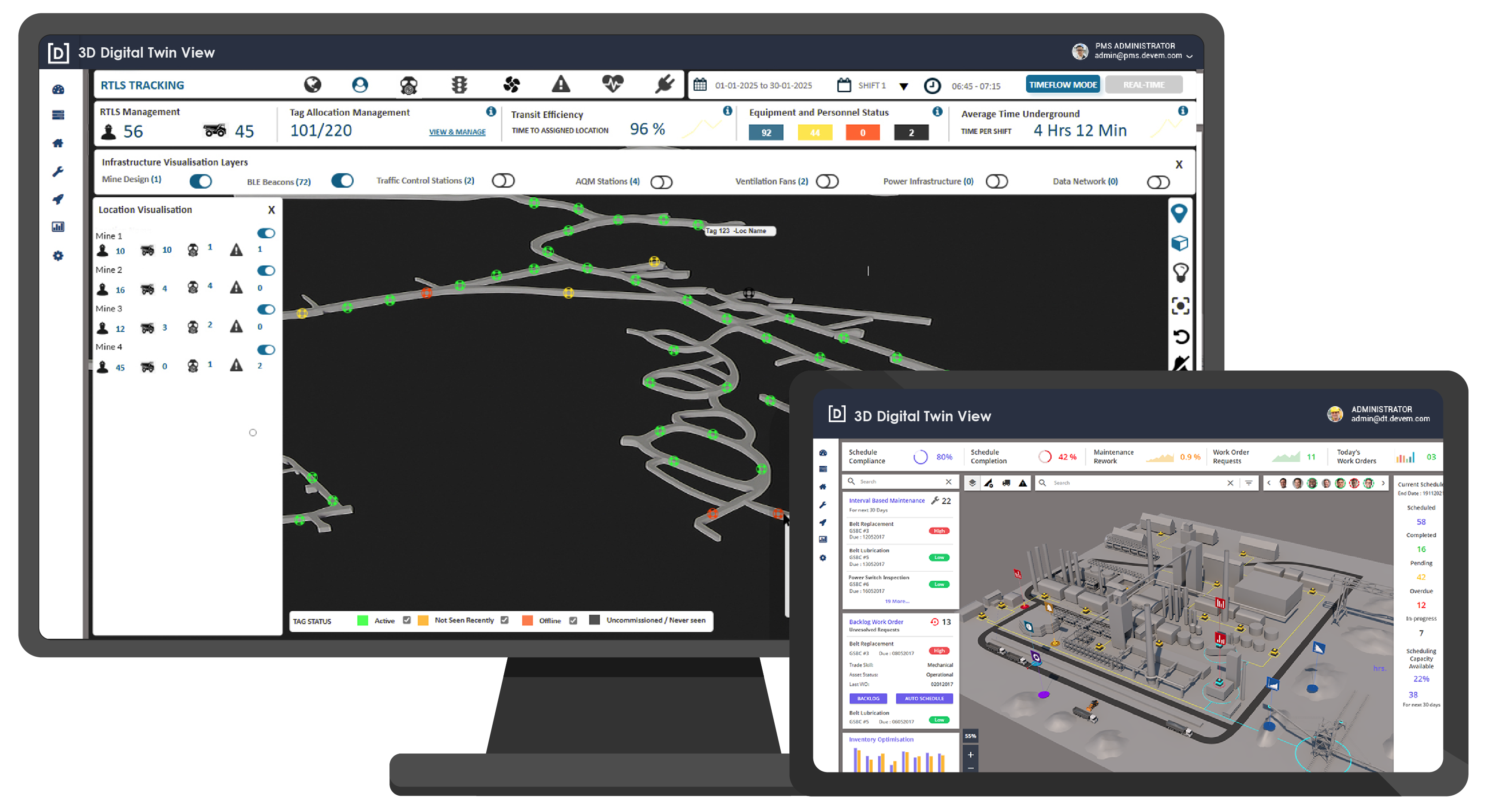 Figure 1: 3D Digital Twin Dashboards built on Devum.
How Devum™ Connects Industrial Data Across the Enterprise
Industrial environments consist of a diverse mix of machines, edge devices, communication networks, and enterprise applications. Devum™ is designed to integrate with this heterogeneous landscape, enabling organisations to ingest, contextualise, and act on operational data without replacing existing investments. One of the key advantages of Devum™ is its ability to work seamlessly within existing industrial environments. Rather than replacing current systems, Devum connects operational and enterprise technologies to create a unified foundation for real-time digital intelligence.
The table below highlights some of Devum’s integration capabilities.
| Industrial Layer | Example Sources | Data Collected | How Devum™ Connects | How Devum™ Uses the Data |
|---|---|---|---|---|
| Physical Machines | Excavators, dumper trucks, conveyor belts, pumps, ventilation systems, crushers, other plant equipment | Engine health, load, payload, fuel consumption, speed, vibration, belt speed, GPS coordinates, environmental conditions | Through on-machine devices, PLCs, SCADA systems, IoT gateways, and industrial routers | Creates a unified operational view across assets |
| Edge Hardware | Rover units, FMC fleet telematics devices, RUT industrial routers, IoT devices and sensors | Machine telemetry, equipment diagnostics, fleet data, environmental readings | Device connectors, MQTT publishers, REST interfaces, industrial communication protocols | Enables real-time acquisition of field data |
| Connectivity Layer | MQTT broker, 4G/LTE networks, mesh networks, field communication infrastructure | Streaming events and telemetry from distributed assets | MQTT, TCP/IP, REST APIs, web services, message-based communication | Securely transports operational data to the Devum platform |
| Industrial Data Ingestion | Ingestion engine | High-frequency machine signals and events | Stream ingestion, data normalisation, protocol translation, database connectors | Converts raw industrial data into a standardised format |
| Operational Intelligence | Rules engine | Threshold breaches, operational exceptions, event triggers | Configurable business rules, alert definitions, event orchestration | Detects anomalies and initiates timely responses |
| Historical and Live Data Management | Time-series store | Historical trends and live operational data | Low-code data models, historian integration, time-series storage | Enables trend analysis, contextual intelligence, and reporting |
| Decision Support Applications | Live dashboards | OEE, fleet performance, utilisation metrics, production KPIs | Low-code application development and visualisation tools | Delivers real-time visibility to stakeholders |
| Advanced Intelligence | AI analytics | Equipment behaviour patterns, predictive indicators | Analytics models and anomaly detection capabilities | Supports predictive maintenance and proactive decisions |
| Operational Execution | Ops workflows | Alerts, maintenance activities, work orders | Workflow automation, ERP integration, notification services | Turns insights into coordinated business actions |
Table 1: Integration Capabilities of Devum™.
.Conclusion: The Future of Industrial Intelligence
The future of industrial intelligence will not belong to organisations that simply collect more data — it will belong to those that can transform data into action. As technologies such as AI-assisted operations, digital twins, automation, and low-code development continue to evolve, the ability to understand, decide, and respond in real time will become a defining advantage. Organisations that can continuously learn from operational data and act with speed and confidence will be better positioned to improve efficiency, resilience, and business performance.
Devum™ helps bridge the gap between machine events and business outcomes by turning raw operational data into actionable insights. By combining real-time visibility, intelligent analytics, and workflow-driven automation, it enables teams to move beyond monitoring and towards proactive, data-driven decision-making.
As industrial environments become increasingly connected and complex, success will not be determined by the amount of data organisations generate, but by how effectively they use it. The organisations that thrive will be those that can transform signals into outcomes, intelligence into action, and operational insights into measurable business value.
Frequently Asked Questions
1. How can industrial organisations turn machine data into actionable insights?
Industrial organisations can transform machine data into actionable insights by connecting operational and business data, analysing it in real time, and presenting it through dashboards, alerts, and workflows. This enables teams to identify issues early, make informed decisions, and take timely action.
2. What is the difference between machine data and operational intelligence?
Machine data is the raw information generated by industrial assets and systems. Operational intelligence adds context and analytics to explain what the data means, why it matters, and what actions should be taken.
3. How does low-code support industrial digital transformation?
Low-code accelerates industrial digital transformation by enabling organisations to rapidly build applications, automate workflows, and connect systems with minimal coding. This reduces development time and helps scale digital initiatives faster.
4. What is the importance of real-time digital intelligence in mining?
Real-time digital intelligence enables mining organisations to respond to changing conditions as they occur. It improves safety, reduces downtime, optimises asset performance, and supports faster, more informed operational decisions.
5. How does an IADP accelerate the journey from machine data to actionable insights?
An IADP brings data integration, contextualisation, visualisation, and workflow automation together in a single platform. This shortens the time between detecting an event and taking action, enabling faster and more effective decision-making.
6. How does an IADP accelerate the journey from machine data to actionable insights?
Devum™ integrates seamlessly with a wide range of operational and enterprise technologies, enabling organizations to connect, consolidate, and act on data from across their ecosystem. It supports integration with MQTT brokers and event buses, SCADA systems, PLCs and RTUs, industrial IoT devices and sensors, fleet telematics systems, and OPC UA-enabled assets. Devum™ also connects with REST APIs, web services, relational databases, and time-series historians, as well as ERP platforms, enterprise applications, and notification and workflow systems.
7. How can real-time decision-making improve manufacturing performance?
Real-time decision-making helps manufacturers identify and resolve issues as they occur, reducing downtime, minimising defects, and improving resource utilisation. It enables organisations to maintain productivity and continuously improve operational performance.

Start your journey with Devum™ today. Sign up and build your first application.
👉 Subscribe to Devum™: https://Try.Devum.com/#/security/SignUp