

The digital transformation of asset-intensive industries, including mining, manufacturing, oil and gas, energy, construction, and logistics, has reached an inflection point. Yet, despite billions invested in Industry 4.0 initiatives, a sobering reality persists: 70% of industrial digitalisation projects fail to scale beyond pilot phase, primarily because enterprises attempt to force-fit generic application development platforms into environments they were never designed to serve.
The solution lies not in another low-code tool, but in a category-defining paradigm: the Industrial Application Development Platform (IADP). Unlike generic platforms that treat all use cases equally, an IADP is purpose-built from the ground up to address the unique architectural, operational, and regulatory complexities of heavy industry. This guide dissects what an IADP truly is, why conventional platforms catastrophically fail in industrial contexts, and how enterprises can leverage this new class of technology to compress development cycles from months to days while achieving production-grade reliability.

What is an Industrial Application Development Platform?
An Industrial Application Development Platform (IADP) is a specialised software development environment that enables enterprises to design, build, deploy, and scale mission-critical operational applications for asset-intensive industries without sacrificing the depth of integration, real-time performance, or security that industrial operations demand.
Crucially, an IADP is not merely a "low-code platform for factories". It represents a fundamental re-architecture of the development stack to natively support:
-
OT/IT Convergence: Direct, bidirectional communication with Operational Technology (OT) systems, including PLCs, SCADA, and industrial IoT sensors, alongside enterprise IT systems like SAP, Oracle, and Microsoft Dynamics.
-
Edge-native Deployment: The ability to run applications on-premises, at the edge, in hybrid setups, or in the cloud, depending on latency, bandwidth, and data sovereignty needs.
-
Offline-first Mobile Architecture: Native mobile applications (iOS and Android) that function fully without connectivity, which is critical for underground mines, offshore rigs, and remote construction sites, and synchronise seamlessly when networks become available.
-
High-frequency Time-series Data Ingestion: The capacity to ingest, process, and visualise sub-second sensor data streams such as vibration, temperature, pressure, and flow rates at scale, enabling real-time short-interval control and predictive analytics.
-
3D Digital Twin Integration: Built-in engines to import CAD, BIM, and photogrammetry models and bind them to live operational data, creating cyber-physical visualisations that provide contextual awareness for complex assets.
-
Industrial-grade Security and Compliance: Role-based access control (RBAC) granular enough to enforce permit-to-work protocols, immutable audit trails for regulatory reporting (ISO 45001, MSHA, DGMS), and encryption standards that meet defence-grade requirements.
Where generic platforms abstract complexity away, an IADP embraces industrial complexity as a first-class citizen. It provides pre-built solution accelerators, such as production management dashboards, fleet tracking modules, digital inspection workflows, and predictive maintenance engines, that encode decades of operational best practice into reusable components.
Why Generic App Development Platforms Fail in Industrial Use Cases?
Enterprise IT leaders often make a costly assumption: if a low-code platform works for CRM, HR, and finance applications, it should suffice for operational use cases. This misconception leads to three catastrophic failure modes.
1. The OT Integration Chasm
Generic platforms might be familiar with connecting to REST APIs, SQL databases, and SaaS applications. However, they possess little to no native understanding of industrial protocols such as Modbus TCP, or OPC UA. To integrate a PLC or SCADA system, organisations must build custom middleware, often using fragile Python scripts or expensive system integrators, which introduces latency, single points of failure, and maintenance nightmares.
Consider a mining operation attempting to build a real-time shovel-truck dispatch application. A generic platform cannot directly poll a dispatch system's OPC UA server for truck locations, nor can it ingest high-frequency GPS telemetry at 10Hz without overwhelming its database layer. The result is applications that display data minutes old, which is useless for short-interval control, or architectures so convoluted that total cost of ownership exceeds custom development.
2. The Offline Mobility Gap
Industrial workforces operate in connectivity deserts. Underground miners at 800 metres depth, offshore wind technicians on North Sea platforms, and pipeline inspectors in remote deserts cannot rely on 4G or 5G. Generic low-code mobile apps typically require continuous connectivity. When the network drops, the app becomes unusable.
An IADP, by contrast, employs local-first architecture: all data, business logic, and UI components reside on the device. A field technician can complete a 50-step safety inspection, capture photos, record sensor readings, and sign off on a permit, all offline. Upon reconnection, the platform intelligently syncs only delta changes, resolving conflicts automatically. This capability is not an add-on. It is foundational to the platform's data model. You can read more about it in this blog.
3. The Real-time Performance Ceiling
Industrial decisions happen in seconds, not minutes. A pump vibration anomaly must trigger an alert before catastrophic failure occurs. A blend-ratio deviation in a mineral processing plant must be corrected within the same shift. Generic platforms, optimised for human-paced workflows such as approving a leave request or submitting an expense claim, cannot sustain the sub-second latency and high-throughput ingestion that operational use cases demand.
Their databases, typically document stores or relational systems designed for transactional consistency, choke on time-series data. Their UI renderers lag when displaying hundreds of real-time tags. Their workflow engines cannot evaluate complex business rules against streaming data. The outcome is dashboards that freeze, alerts that arrive too late, and operators who revert to paper and radio.
Why Industrial Software Needs to Be Built Differently?
Industrial operations have evolved faster in the last decade than in the previous fifty years. Mines are becoming data-driven, manufacturing floors are turning into connected ecosystems, and logistics networks are expected to operate with real-time precision.
Yet, one thing has not kept up. The way industrial applications are built.
Industrial applications are not "business apps with gauges". They differ fundamentally in architecture, risk profile, and user context. Understanding these distinctions explains why a specialised platform is non-negotiable. Most enterprises still rely on either rigid off-the-shelf software or slow, expensive custom development. Neither approach truly fits the complexity of industrial environments.
The Physical-Digital Feedback Loop
In enterprise software, a bug means a failed transaction. In industrial software, a bug can mean equipment destruction, environmental incidents, or even worse, loss of life. A misconfigured valve control algorithm can over pressurise a pipeline. An incorrect blend ratio can contaminate an entire batch of products. Consequently, industrial applications require:
-
Deterministic Execution: Business logic must be executed predictably, with guaranteed latency bounds, regardless of system load.
-
Fail-Safe Defaults: When connectivity or sensors fail, applications must degrade gracefully to safe states instead of crashing or displaying stale data as truth.
-
Immutable Audit Trails: Every action, from a supervisor overriding an alarm to a technician modifying a setpoint, must be cryptographically logged for forensic analysis and regulatory compliance.
The Heterogeneous Legacy Landscape
Greenfield industrial sites are mythical. Brownfield operations run on a patchwork of systems spanning decades: 1980s-era PLCs communicating over serial links, 1990s SCADA systems on Windows NT, 2000s-era historians, and 2020s cloud analytics platforms. An IADP must speak this polyglot protocol landscape fluently, translating between Modbus RTU, OPC DA, OPC UA, MQTT, and REST.
Generic platforms assume modern, API-first systems. They cannot natively poll a Modbus register from a 30-year-old flow meter or parse a proprietary binary protocol from a legacy weighbridge. This limitation forces organisations into expensive rip-and-replace cycles or, worse, leaves critical data siloed.
Challenges in Industrial Application Development (and How to Solve Them)
Even with an IADP, industrial application development presents unique hurdles. Here are the five most common challenges and proven strategies to overcome them.
Challenge 1: Legacy System Integration Complexity
Problem: Connecting to legacy OT systems requires specialised protocol knowledge, and custom middleware becomes a maintenance burden.
Solution: Deploy an IADP with native protocol adapters and a unified tag namespace. Platforms like Devum provide pre-built connectors for OPC UA, Modbus TCP/RTU, BACnet, MQTT, etc. Instead of writing custom code, developers map PLC tags to platform entities visually. The IADP handles polling, caching, and quality flagging automatically.
Pro Tip: Use the platform's edge gateway capability to deploy protocol adapters close to the source, reducing network latency and bandwidth consumption.
Challenge 2: Data Silos and Fragmented Visibility
Problem: Operational data resides in disconnected systems. Fleet management sits in one database, production tracking in another, and maintenance in a third, preventing holistic decision-making.
Solution: Implement a unified operational data hub within the IADP. Ingest data from all source systems into a single time-series-optimised repository, then build cross-domain applications that correlate metrics, for example linking truck cycle times to crusher throughput to maintenance events.
Reactore's deployment at one of the leading iron ore mines exemplifies this. MineOne integrates dispatch, weighbridge, fuel management, and maintenance systems into a single source of truth, enabling executives to view real-time OEE across the entire value chain.
Challenge 3: Data Silos and Fragmented Visibility
Problem: IT developers lack OT domain knowledge. OT engineers lack software development skills. This creates a delivery bottleneck.
Solution: Leverage an IADP's low-code abstraction to empower domain experts, such as process engineers and maintenance supervisors, to build applications themselves, while providing SDKs for professional developers to extend functionality with custom code written in C#, Python, etc. when needed.
This hybrid approach, citizen development for standard workflows and pro-code for complex integrations, democratises innovation without sacrificing architectural rigour.
Challenge 4: Data Silos and Fragmented Visibility
Problem: Frontline workers resist digital tools perceived as cumbersome, unreliable, or disconnected from their reality.
Solution: Prioritise co-design workshops where operators, technicians, and supervisors define workflows before a single screen is built. Use the IADP's rapid prototyping capability to iterate on feedback weekly, not monthly. Deploy offline-first mobile apps that work flawlessly in connectivity-challenged environments, building trust through reliability.
Additionally, gamify adoption: display real-time performance leaderboards, recognise top performers, and tie app usage to tangible outcomes such as reduced paperwork and faster shift handovers.
Challenge 5: Stuck in Pilot Mode with No Clear Return
Problem: Organisations launch dozens of pilots but struggle to quantify value or scale successes enterprise-wide.
Solution:
|
1. Connect |
2. Model |
3. Build |
4. Deploy and Scale |
|
Integrate data from machines, sensors, and enterprise systems. |
Define your operations, workflows, and data relationships. |
Create applications, dashboards, and digital twins visually. |
Go live and scale across sites without major rework. |
This methodology compresses time-to-value from 18 months to 90 days, ensuring pilots graduate to productions.
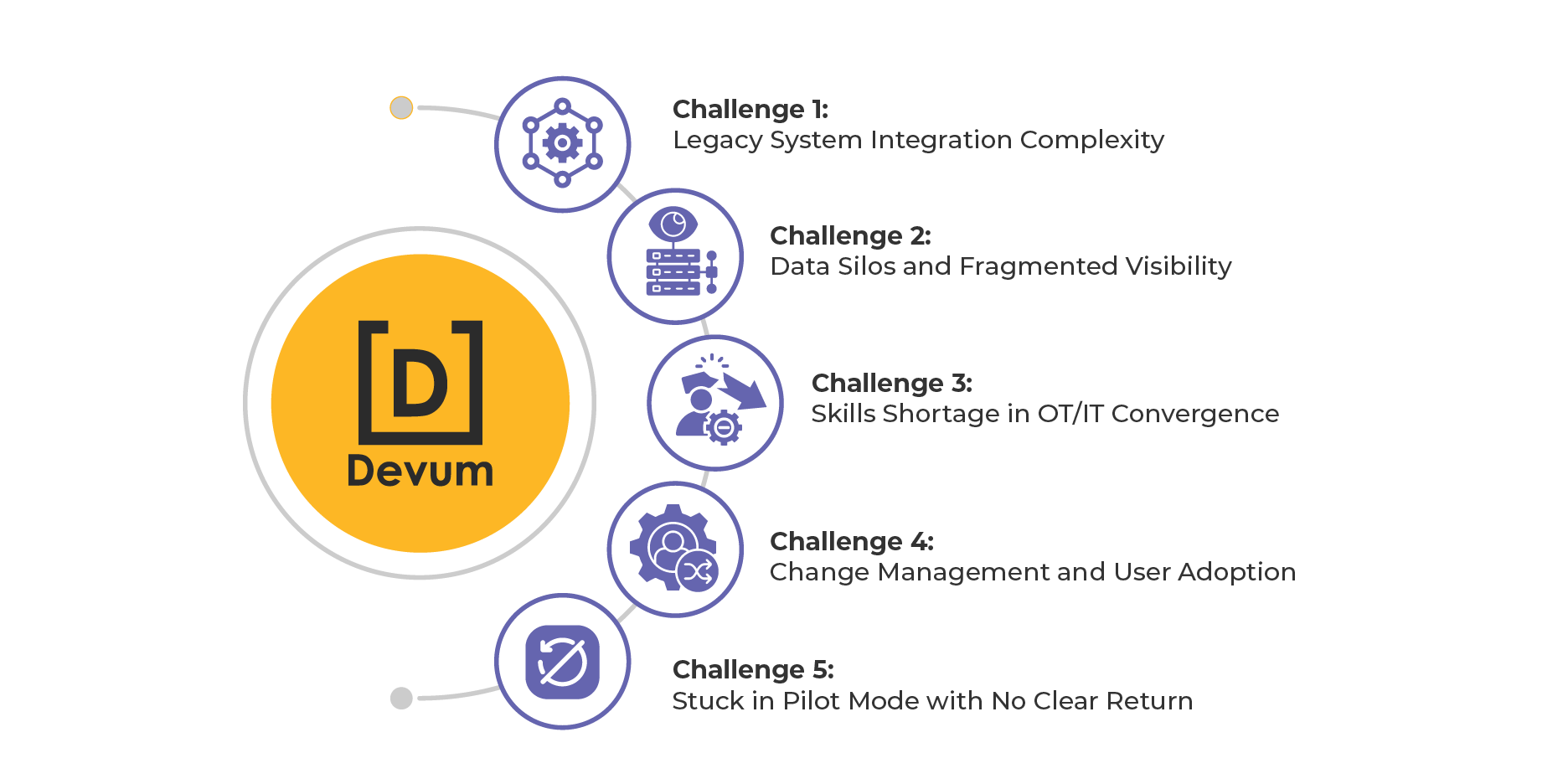
Figure 1: Challenges in Industrial Application Development and How to Solve Them
What to Look for in an Industrial Application Development Platform
Not all platforms claiming "industrial" capabilities deserve the title. Evaluate vendors against these non-negotiable criteria, digging deeper than marketing brochures to understand architectural reality.
1. Native OT Protocol Support
Do not accept "API connectivity" as a substitute for native industrial protocol support. A genuine IADP must include pre-built, bidirectional adapters for OPC UA, Modbus TCP, and MQTT out of the box.
-
Polling Frequency: Can the platform poll tags at sub-second intervals (100ms to 500ms) without custom code or performance degradation? This is critical for real-time control loops.
-
Quality Flag Handling: Does it natively handle OPC quality flags (Good, Bad, Uncertain), so applications can degrade gracefully when sensors fail instead of displaying stale data as truth?
-
Protocol Translation: Can it act as a gateway, translating Modbus RTU from a legacy meter to OPC UA for a modern SCADA, all within the platform logic?
Ask for a live demonstration where the vendor connects to a simulated PLC or a real Modbus device in the room. If they need to write Python scripts or deploy separate middleware, walk away.
2. Edge-native, Hybrid Deployment
Industrial operations cannot rely solely on cloud connectivity. Evaluate the platform's deployment flexibility with surgical precision.
-
Full Offline Operation: Can applications run completely disconnected on local servers, ruggedised edge gateways, or even industrial PCs? The platform runtime must include all dependencies, databases, and logic engines locally.
-
Hybrid Sync Architecture: Does the platform support store-and-forward architectures where edge nodes process real-time data locally and sync only aggregates or exceptions to the cloud? This reduces bandwidth costs by 90% in remote sites.
-
Data Sovereignty Controls: Can you configure data residency rules, such as keeping sensitive operational data on-premises while sending anonymised analytics to the cloud for enterprise reporting?
-
Containerised Deployment: Is the platform available as Docker or Kubernetes containers for seamless integration into existing industrial IT infrastructure?
Test the failover: disconnect the network mid-operation and verify that the application continues to function, log data, and execute workflows without interruption.
3. Offline-first Mobile Runtime
Mobile connectivity in industrial environments is unreliable by definition. The platform's mobile strategy must assume offline as the default state, not the exception.
-
Local Data Storage: Do mobile apps store all necessary data, business logic, and UI components locally on the device? Verify that a technician can open the app, view work orders, complete inspections, and capture photos with zero connectivity.
-
Intelligent Conflict Resolution: When two users update the same asset record offline, does the platform automatically resolve conflicts using configurable rules (last-write-wins, merge fields, flag for manual review)?
-
Background Sync: Does sync occur in the background without blocking the user interface, and can it resume automatically after intermittent connectivity drops?
Conduct a field test: take the mobile app into a basement, mine shaft, or Faraday cage and verify full functionality. \
4. Time-series Data Engine
Industrial operations generate high-frequency sensor data that cripples conventional databases. The IADP must include a purpose-built time-series engine.
-
Ingestion Throughput: Can the platform ingest 10 to 100 data points per second per tag across thousands of tags without performance degradation? Ask for benchmark results.
-
Built-in Analytics: Does it provide native time-series functions such as moving averages, rate-of-change, standard deviation, and anomaly detection without requiring external analytics tools?
-
Real-time Visualisation: Can dashboards display real-time trends with sub-second refresh rates, and can users drill down from year-over-year aggregates to millisecond-level raw data seamlessly?
-
Data Compression: Does the platform employ compression algorithms (such as rotating door or Swinging Door Trending) to reduce storage costs by 90% without losing fidelity?
Request a stress test: stream 10,000 tags at 10Hz for one hour and monitor CPU, memory, and query latency.
5. 3D Digital Twin Integration
A 3D visualisation is not a digital twin unless it is bound to live data and supports interactive exploration.
-
Format Support: Does the platform import CAD, and BIM models in standard formats (DWG, GLTF, etc.) without requiring manual conversion?
-
Live Data Binding: Can 3D models be bound to live tags, so clicking a pump displays its real-time pressure, temperature, vibration, and maintenance history in a contextual panel?
-
Web-based Rendering: Is 3D visualisation web-based (using WebGL or WebGPU) with no plugins, and is it mobile-optimised for tablets and AR headsets?
-
Spatial Queries: Can users perform spatial queries, such as "show all valves within 10 metres of this gas leak" or "highlight all assets with active alarms"?
Ask the vendor to demonstrate a digital twin, where clicking on an asset, drills down into its real-time performance, maintenance history, and linked work orders.
6. Industrial Solution Accelerators
Pre-built templates accelerate time-to-value, but only if they are production-grade, not demo-ware.
-
Production-ready Modules: Does the vendor provide pre-built, configurable templates for common use cases such as production dashboards, digital inspections, fleet tracking, and permit-to-work systems?
-
Industry Best Practices: Do these accelerators encode industry standards such as ISO for reliability data collection, safety workflows, or for energy management?
-
Customisability: Can you modify workflows, data models, and UI layouts without breaking upgrade paths, or are you locked into vendor-defined processes?
-
Deployment History: Have these accelerators been deployed at scale in production environments? Ask for case studies and customer references.
Verify that the "production management" template includes short-interval control logic, shift handover workflows, and bottleneck analysis, not just a pretty dashboard.
7. Enterprise Security and Compliance
Industrial systems are high-value targets for cyberattacks. Security cannot be an afterthought.
-
Granular RBAC: Does the platform support role-based access control, such as restricting a contractor to viewing only their assigned assets during their contract period?
-
Immutable Audit Trails: Are audit logs cryptographically signed and exportable in formats suitable for regulatory reporting (PDF, CSV, SIEM integration)?
-
Enterprise SSO Integration: Does it integrate seamlessly with SAML, OAuth, and Active Directory/LDAP for single sign-on?
-
Encryption Standards: Is data locked down both when stored and when being sent across networks using military-grade encryption? Can you control the encryption keys yourself through your own secure key management system?
Request a third-party security audit report (ISO 27001/SOC 2 Type II) and verify penetration testing results.
Why is Devum™ Considered a Leading Industrial Application Development Platform in the Market?
Devum™ has earned its position as a category-defining IADP through a combination of architectural differentiation, proven industrial deployments, and ecosystem partnerships that generic platforms cannot replicate.
Architectural Differentiation: Built for Industry, Not Adapted to It
Devum™'s core architecture was designed from day one for asset-intensive industries, not retrofitted from enterprise use cases. Key differentiators include:
-
Domain Services Engine: A low-code backend logic builder that supports complex, stateful workflows, such as multi-stage permit approvals with conditional branching based on real-time gas readings.
-
3D Digital Twin Engine: Native support for importing and binding CAD/BIM models to live data, enabling contextual visualisations that reduce cognitive load for operators.
-
Real-time Analytics Engine: Process streaming data and generate actionable insights, alerts, and performance metrics instantly.
-
Integration and Data Engine: Connect IoT devices, PLC, SCADA, ERP, and external systems into a unified data layer.
-
Application Composition Engine: Build and assemble industrial applications using reusable components, workflows, and services.
-
Automation and Workflow Engine: Design event-driven workflows, alerts, and automated actions across systems and operations.
-
Security and Access Engine: Ensure role-based access, data protection, and enterprise-grade governance across applications.
-
Deployment and Scalability Engine: Deploy across cloud, on-prem, or hybrid environments, scaling seamlessly across sites and regions.
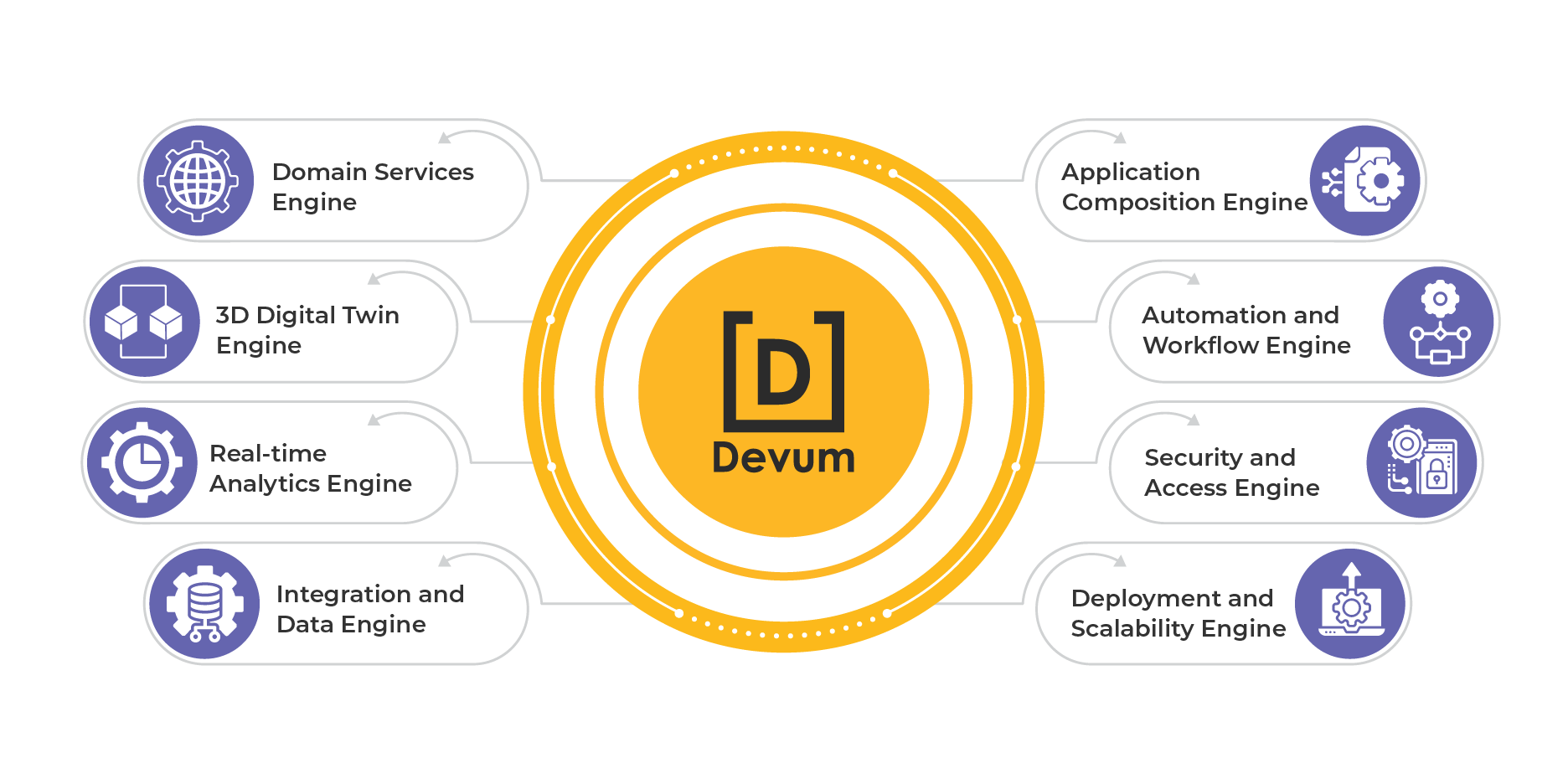
Figure 2: Why is Devum™ Considered a Leading Industrial Application Development Platform in the Market

How to Build Industrial Applications Faster with Devum™
Speed matters, but not at the expense of robustness. Devum™ IADP accelerates development through three mechanisms: visual abstraction, solution accelerators, and hybrid extensibility.
Visual Abstraction: Drag, Drop, Deploy
Instead of writing thousands of lines of code to poll a PLC, parse JSON, and render a chart, developers use Devum™ App Studio to:
-
Register the app and define user roles and permissions.
-
Create a new page using the App Studio, selecting whether it is a web app, mobile app, dashboard, or report.
-
Drag and drop controls (containers, forms, charts, 3D, maps) onto a responsive grid layout, then customise properties visually.
-
Model data using Devum™'s intuitive data modelling features to create relational tables aligned with the app's use case.
-
Compose workflows using the visual Workflow Builder to map business processes, set rules, triggers, and assign tasks to users or systems.
-
Bind data to the interface by linking form fields and widgets to data models, APIs, or OT tags through point-and-click configuration.
-
Extend with Domain Services when needed, using low-code logic builders or custom C#/Python for complex integrations.
This approach reduces development time for operational dashboards from 6 to 8 weeks to 2 to 3 days.
Solution Accelerators: Start with 80% Complete
Rather than building from scratch, teams start with pre-built templates available in the Devum™ console:
-
Production Management: Short-interval control dashboards, shift performance scorecards, bottleneck analysis reports.
-
Fleet Management: GPS tracking maps, fuel consumption analytics, maintenance scheduling workflows.
-
SHERQ (Safety, Health, Environment, Risk, Quality): Digital inspection forms, incident reporting apps, permit-to-work systems.
-
And many more...
These accelerators are not demos. They are production-grade applications used at scale in mines, plants, and construction sites. Teams customise them to their specific workflows, cutting time-to-value by 60 to 70%.
Hybrid Extensibility: Low-Code Plus Pro-Code
When use cases exceed low-code boundaries, for example integrating a proprietary AI model or implementing complex optimisation algorithms, Devum™ provides Fluent Services SDKs for C#, Java and Python. Professional developers write microservices that:
-
Expose REST APIs callable from low-code workflows.
-
Subscribe to event streams for real-time processing.
-
Access the platform's data layer directly for bulk operations.
This hybrid model ensures the platform scales with complexity, never becoming a ceiling.
The Devum™ Advantage: A Summary
Conclusion: The Industrial Application Development Imperative
The choice is no longer between custom code and low-code. It is between generic platforms that fail in industrial contexts and Industrial Application Development Platforms purpose-built for the realities of asset-intensive operations.
Enterprises that persist with generic tools will remain trapped in pilot purgatory, wrestling with integration fragility, offline failures, and performance ceilings. Those that embrace an IADP like Devum™ will unlock:
-
10x faster development cycles, compressing months into days.
-
30% to 65% reduction in unplanned downtime through real-time visibility and predictive analytics.
-
A single source of truth that breaks down silos between OT and IT, operations and maintenance, safety and production.
-
Future-proof architecture that scales from edge to cloud, supporting AI-driven autonomy and digital twin maturity.
The industrial digitalisation race is not won by those with the most pilots, but by those who operationalise innovation at scale. An Industrial Application Development Platform is not a tool. It is the foundation upon which that scale is built.
Start your journey with Devum™ today. Sign up and build your first application.
👉 Subscribe to Devum™: https://Try.Devum.com/#/security/SignUp