


Industrial facilities generate an enormous volume of operational data every second. PLCs control production equipment, sensors monitor temperature and vibration, energy meters track power consumption, ventilation systems maintain safe working environments, and SCADA platforms collect information from across the plant. Together, these systems provide a continuous stream of data that reflects the health and performance of industrial operations.
The majority of these devices communicate using well-established industrial protocols such as Modbus TCP, OPC UA, MQTT, BACnet, REST APIs, and SQL databases. Over the years, these protocols have become the backbone of industrial communication, allowing equipment from different manufacturers to exchange information reliably.
Today, connecting industrial devices is no longer the biggest challenge.
The real challenge begins after the connection is established.
In many industrial environments, the journey ends once device data reaches a dashboard. Operators can monitor equipment status, review alarms, and observe production metrics in real time. While this provides visibility into operations, it still leaves most business decisions to people.
Questions such as these continue to require manual intervention:
-
Is this equipment failure critical enough to stop production?
-
Which ventilation system requires immediate attention?
-
Is maintenance required now or during the next planned shutdown?
-
Should another workflow be triggered automatically?
-
Is this simply an operational issue, or does it represent a safety risk?
Although industrial data is available, it often exists without sufficient operational context.
Raw data alone cannot improve productivity, enhance safety, or automate business processes. It must first be interpreted, enriched with business rules, connected to workflows, and presented within the context of day-to-day operations.
This is where modern industrial application platforms create value. Rather than stopping at connectivity, they transform industrial data into operational intelligence that supports decision-making, automation, and continuous improvement.
In this article, we'll explore how Modbus integration serves as the foundation for building intelligent industrial applications and how a low-code approach simplifies the process of connecting devices, applying business logic, and delivering real operational outcomes.
What is Modbus?
Introduced by Modicon in 1979, Modbus remains one of the world's most widely adopted industrial communication protocols. Designed to enable reliable communication between industrial devices, it provides a simple and vendor-neutral method for exchanging information between PLCs, sensors, controllers, gateways, and supervisory systems.
Despite being more than four decades old, Modbus continues to play a critical role in modern industrial automation because of its simplicity, reliability, and extensive device support.
Today, thousands of industrial facilities across mining, manufacturing, utilities, oil and gas, water treatment, and infrastructure continue to rely on Modbus for collecting operational data from field devices.
The protocol is commonly available in three variants:
|
Variant |
Typical Use |
|
Modbus RTU |
Serial communication over RS-485 and RS-232 networks |
|
Modbus ASCII |
Human-readable serial communication, primarily for diagnostics |
|
Modbus TCP/IP |
Ethernet-based communication for modern industrial networks |
Table 1: Typical Use of Modbus Variant
Among these, Modbus TCP has become the preferred choice for new industrial deployments because it combines the simplicity of Modbus with the speed and scalability of Ethernet-based infrastructure.
 What are the Benefits of Modbus Integration?
Modbus continues to be widely used across industrial environments because it provides a practical and reliable way to connect equipment from different manufacturers. Key benefits include:
-
Vendor-neutral connectivity: Enables communication between PLCs, controllers, sensors, and other industrial devices from different manufacturers without relying on proprietary interfaces.
-
Simple implementation: Its relatively straightforward communication model makes device configuration and integration easier than more complex industrial protocols.
-
Proven reliability: Decades of deployment across mining, manufacturing, utilities, oil and gas, water treatment, and infrastructure have established Modbus as a reliable industrial communication protocol.
-
Broad device compatibility: Supports a wide range of industrial equipment, making it suitable for connecting both existing assets and newer digital systems.
-
Legacy system integration: Allows organisations to connect existing PLCs and controllers to modern industrial applications without replacing operational infrastructure
- Scalable industrial connectivity: With Modbus TCP, devices can communicate over Ethernet-based networks, providing a practical foundation for integrating industrial assets into modern digital applications.
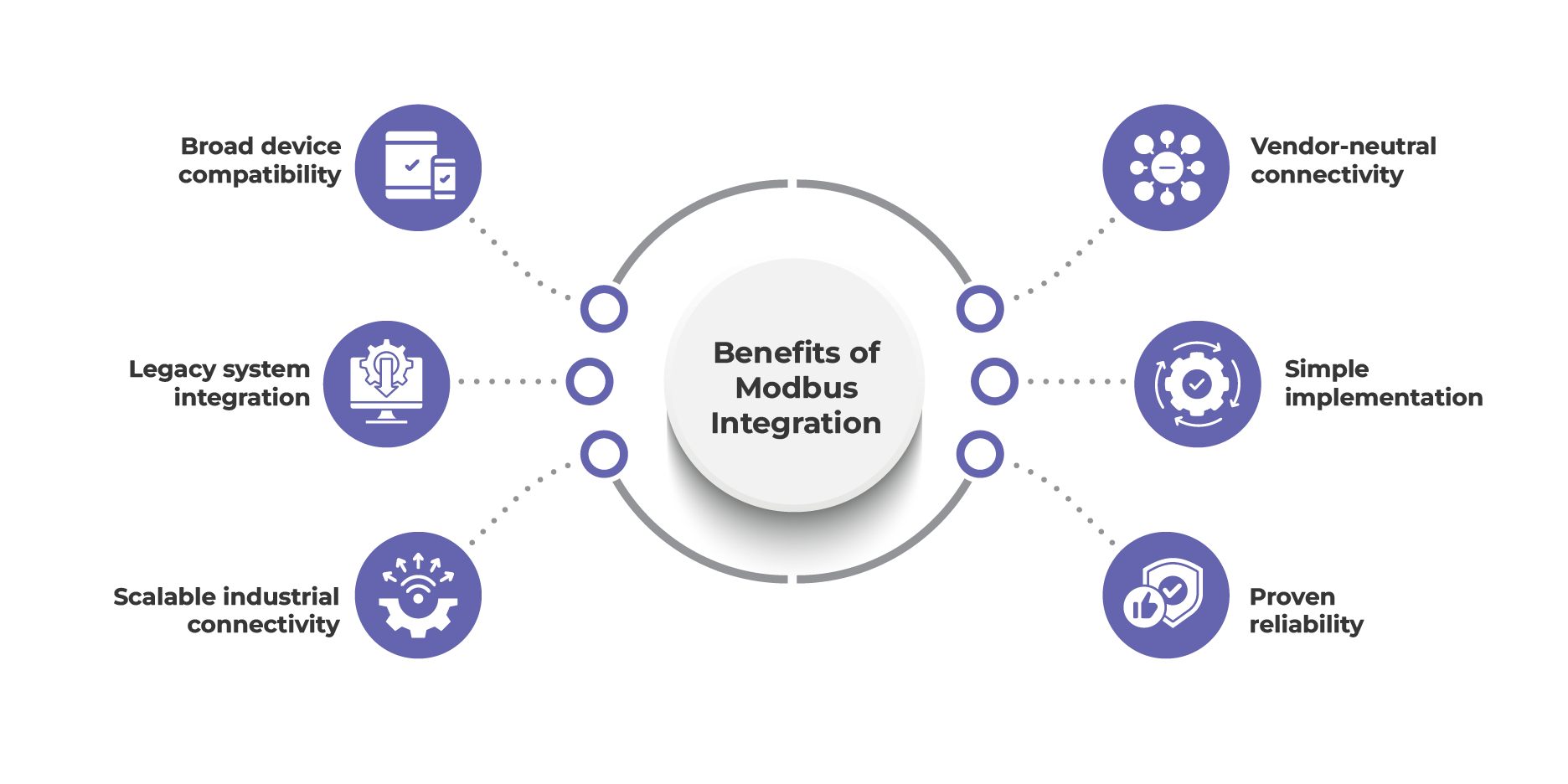
Figure 1: Benefits of Modbus Integration.
Why Connectivity Alone Doesn't Solve Industrial Problems?
Many industrial organisations still rely on disconnected systems, spreadsheets, static dashboards, and periodic reports to manage operations. While these tools provide visibility into individual processes, they rarely deliver a unified, real-time view of the business.
Machine data often remains trapped across SCADA systems, ERP platforms, and other applications, forcing teams to manually reconcile information and react only after problems have occurred. Large integration projects further slow innovation through lengthy deployments and specialised development requirements.
The result is decision latency. Delayed responses lead to production losses, avoidable downtime, higher maintenance costs, and missed opportunities for optimisation. In today's fast-moving industrial environments, organisations cannot afford to rely on hindsight. Competitive advantage depends on the ability to connect data, generate timely insights, and act before small issues become major disruptions.
From Machine Data to Actionable Insights: The New Industrial Imperative
Connecting industrial devices provides visibility, but data alone does not drive operational decisions.
A typical setup may look like:
Industrial Device → PLC → Modbus → Dashboard
A dashboard can show that a fan has stopped or a vehicle has entered a tunnel, but it cannot determine what should happen next.
-
Should maintenance be notified?
-
Should a route be reserved?
-
Should another system compensate?
-
Should operations be stopped?
These decisions require business logic and operational context.
Industrial applications therefore need to go beyond connectivity by combining device data with business rules, workflows, alerts, KPIs, dashboards, and automation. This is what transforms raw industrial data into actionable operational intelligence.
From Connectivity to Operational Intelligence
Industrial environments rarely rely on a single communication protocol or a single software system. A typical mining operation or manufacturing facility may simultaneously use PLCs, SCADA systems, Modbus devices, OPC UA servers, MQTT brokers, REST APIs, SQL databases, ERP platforms, and MES applications. Each serves a specific purpose, yet together they form the digital backbone of operations.
The challenge is no longer connecting to individual devices. It is bringing these diverse technologies together into a unified operational ecosystem where information can flow seamlessly across systems, processes, and people.
Traditional integration projects often focus on establishing communication between devices. While this solves the technical problem of data acquisition, every new project frequently requires custom development, protocol-specific configurations, and independent integrations. The result is a collection of isolated implementations that are difficult to scale and maintain.
A more sustainable approach is to treat industrial connectivity as a reusable capability rather than a one-time project.
Instead of rebuilding communication logic for every application, organisations can create a standardised integration layer where connected device data becomes available across multiple business applications. Once operational data is acquired, it can be reused to power dashboards, automate workflows, calculate KPIs, generate alerts, and support enterprise-wide decision-making.
This shift represents the evolution from industrial connectivity to operational intelligence.
Building Operational Applications with Devum™
This is where Devum™ fits into the picture.
Rather than positioning Modbus integration as the end objective, Devum™ treats it as the starting point for building industrial applications.
As an Industrial Application Development Platform (IADP), Devum™ combines industrial connectivity with low-code application development, enabling organisations to transform operational data into complete business solutions.
Instead of simply reading values from connected devices, Devum™ provides the capabilities to:
-
Apply business rules to operational data.
-
Automate workflows across departments.
-
Generate real-time alerts and notifications.
-
Monitor operational KPIs.Build role-based dashboards.
-
Develop enterprise-grade industrial applications using a low-code approach.
In this model, every connected device becomes part of a broader operational ecosystem rather than remaining an isolated source of data.
For developers, this significantly reduces the effort required to build industrial software. Rather than spending time implementing protocol-level communication for every new project, they can focus on solving operational challenges and delivering business value.
A Reusable Approach to Industrial Connectivity
Industrial organisations seldom depend on Modbus alone.
A single facility may use Modbus to communicate with PLCs, OPC UA for machine interfaces, MQTT for IoT devices, REST APIs for enterprise applications, and SQL databases for historical data. Managing each integration independently quickly becomes expensive and difficult to maintain.
To address this, Devum™ is building an Industrial Connector Library—a growing collection of reusable connectors designed to simplify industrial communication across multiple protocols.
Instead of developing a custom connector for every project, developers can leverage pre-built connectors to integrate industrial assets more efficiently while maintaining a consistent architecture across applications.
Modbus represents one of the foundational connectors within this library.
Once a Modbus-enabled device is connected, the same operational data becomes available throughout the platform. Whether the requirement is monitoring equipment health, triggering maintenance workflows, analysing production KPIs, or developing entirely new industrial applications, the underlying connectivity can be reused without additional protocol-level development.
This reusable approach not only accelerates project delivery but also improves maintainability and scalability as organisations expand their digital transformation initiatives.
How Modbus Integration Works in Devum™?
One of the biggest challenges in industrial application development is implementing and maintaining protocol-level communication before application logic can be built. Devum™ addresses this through its Integration Layer, where Modbus TCP connectivity is handled through a dedicated device driver/service.
The integration follows a configuration-driven approach. Developers configure the connection details of the Modbus TCP device, including its IP address and communication port, and map the required Modbus registers to the device inputs and outputs. The Integration Layer then handles communication with the connected controller by polling configured registers for incoming data and issuing write commands when an application needs to control the device.
The acquired register values are processed and exposed within Devum™ as configurable, bindable data points rather than remaining as raw protocol data. These data points can represent operational states, fault conditions, control states, or other device-specific signals and can be consumed by dashboards, KPI components, workflows, and other applications built on the platform.
The communication is bidirectional. Devum™ continuously acquires data from the connected device through configured inputs while application actions can generate output write events that send commands back to the controller. Changes in input or fault states can also generate internal events that can be consumed by Workflow Builder for alerts and automated actions.
This creates a flow in which:
Modbus TCP Device → Integration Layer → Register Data → Devum™ Data Points → Business Logic / Events → Applications
and, for control operations:
Devum™ Application / Workflow → Output Event → Integration Layer → Modbus TCP Write → Connected Device
Once configured, the connectivity layer can be reused across multiple applications without implementing the underlying Modbus communication again. Developers can therefore work with device data through Devum's application components while the Integration Layer handles the protocol-specific communication.
From Industrial Connectivity to Real-World Operations
The value of Modbus integration is not determined simply by whether a device can communicate with an application. Its value comes from what the application can do with the data once that communication is established.
Once operational data is acquired through Devum's Integration Layer, the same connected data points can be combined with business rules, state-based logic, workflows, dashboards, KPIs, alerts, and control actions. This allows a common Modbus TCP connectivity foundation to support different industrial applications without creating a separate communication implementation for each use case.
Use Case 1: Smart Underground Traffic Management
Underground mining operations often consist of narrow, single-lane haul roads where vehicles travelling in opposite directions cannot safely pass each other. Coordinating vehicle movement in these environments is critical for maintaining both safety and productivity.
Traditionally, operators manage traffic using radios, manual communication, and visual confirmation. As mines become larger and vehicle movement increases, this approach becomes increasingly difficult to manage. Miscommunication can lead to congestion, unnecessary waiting times, vehicle face-offs, and serious safety risks.
With Devum™, traffic controllers and field devices can communicate through Modbus, with operational signals acquired through the Integration Layer and exposed as application-level data points. These data points can then be processed using configurable business rules and state-based logic to determine the operational state of the underground traffic network.
For example, the application can evaluate:
-
Which tunnel sections are occupied.
-
The direction of vehicle movement.
-
Whether a route should be reserved for an approaching vehicle.
-
When traffic signals should change.
-
Whether an abnormal state requires operator intervention.
Based on these conditions, Devum™ workflows can trigger actions automatically. Traffic signals can be updated, alerts can be generated, and occupancy information can be shared across control interfaces without requiring manual coordination.
The underlying Modbus communication remains responsible for exchanging device data, while the operational logic is implemented at the application layer. This separation allows traffic management rules to be modified or extended without changing the underlying device integration.
The result is a connected traffic management application that uses industrial device data as the input for real-time decision-making, automation, and operational control.
Use Case 2: Intelligent Industrial Ventilation
Ventilation is critical across mining, tunnelling, manufacturing, and other industrial environments where adequate airflow directly affects worker safety, operating conditions, and regulatory compliance
With Devum's MODBUS TCP integration, ventilation controllers can be connected through the Integration Layer, allowing operational signals from the controllers to be acquired as configurable data points. Inputs can represent fan states and fault conditions, while outputs can be used to issue control commands to supported devices.
The acquired data can be processed within Devum™ and exposed to applications for real-time monitoring and operational analysis. Operators can gain visibility into:
-
Fan operating status.
-
Equipment health and fault conditions.
-
Runtime information.
-
Performance trends.
-
Other configured device signals.
Because the integration supports both data acquisition and device control, applications can also send commands back to the ventilation controller. For example, an application can switch a fan ON or OFF through a configured output, or trigger a predefined ventilation cycle using the supported control mode.
The same device data can also drive Devum™ workflows. A change in a fault state can generate an internal event that triggers a maintenance notification, while runtime or operating conditions can be used as inputs for preventive maintenance workflows. Environmental conditions and operational thresholds can similarly be combined with business rules to trigger alerts or automated actions.
This allows the ventilation controller to become part of a larger operational application rather than remaining an isolated control device. Monitoring, control, event handling, workflow automation, and KPI visualisation can all operate on the same underlying device data.
The result is a connected ventilation management system that reduces dependence on manual inspection while providing a common platform for monitoring, control, automation, and operational reporting.
Why the Low-Code Approach Makes a Difference?
The technical communication with the Modbus device remains the same regardless of the application being built. What changes is how the acquired data is interpreted and used.
In a traditional industrial software project, developers may need to implement protocol-specific communication, device mappings, data handling, and control logic before developing the actual business application. Repeating this work for every application increases development effort and creates additional integration and maintenance requirements.
Devum™ separates the connectivity layer from the application layer. Once the MODBUS TCP device integration is configured, its data points and events can be reused by application components such as dashboards, workflows, KPIs, alerts, and other low-code components.
Developers can therefore focus on the operational logic—how device states should be interpreted, what conditions should trigger an action, and how information should be presented—without repeatedly implementing the underlying Modbus communication.
This creates a reusable architecture in which industrial connectivity becomes a shared foundation for multiple applications. The same connected device data can support monitoring, automation, maintenance, control, and operational intelligence without requiring a new protocol-level integration for every use case.
Conclusion
Industrial digital transformation begins with connectivity, but it doesn't end there.
Protocols such as Modbus have played a foundational role in industrial automation for decades by enabling reliable communication between devices. They remain one of the most effective ways to acquire operational data from PLCs, sensors, controllers, and other field equipment. However, as industrial operations become more connected and data-driven, simply collecting information is no longer enough.
The real value lies in what organisations do with that data.
Transforming operational data into meaningful business outcomes requires more than device communication. It requires the ability to apply business logic, automate workflows, monitor performance, generate actionable insights, and develop applications that solve real operational challenges.
This is where low-code application development creates a significant advantage.
By combining industrial connectivity with reusable integrations, configurable business logic, workflow automation, dashboards, and application development capabilities, organisations can move beyond isolated monitoring solutions and build systems that actively support day-to-day operations.
Rather than developing custom integrations for every project, engineering teams can establish a reusable connectivity foundation and focus on delivering applications that improve safety, productivity, asset utilisation, and operational efficiency.
Whether the objective is managing underground traffic, monitoring ventilation systems, tracking equipment health, automating maintenance workflows, or building entirely new operational solutions, the same integration framework can be extended across multiple use cases without repeatedly solving the same connectivity challenges.
Modbus may be one of the oldest industrial communication protocols, but its role continues to evolve. When combined with a modern low-code platform, it becomes more than a protocol for exchanging data—it becomes the foundation for building intelligent industrial applications that enable faster decision-making, greater automation, and scalable digital transformation.
As industries continue to modernise their operations, organisations that view connectivity as the beginning of the application lifecycle—not the end—will be better positioned to unlock the full value of their operational data.
Frequently Asked Questions
1. Which low-code platform is best for Modbus integration?
The right platform depends on the application's requirements, but organisations looking beyond basic connectivity should consider a low-code industrial application platform that combines Modbus integration with business logic, workflows, dashboards, alerts, and application development. Devum is designed around this approach.
2. Can Modbus integration be used with existing industrial equipment?
Yes, Modbus can help connect existing PLCs, controllers, sensors, and other industrial equipment to modern applications without requiring organisations to replace their existing infrastructure.
3. Can Modbus data be used to automate industrial processes?
Yes, When Modbus data is connected to business rules and workflows, it can be used to trigger alerts, notifications, control actions, maintenance processes, and other automated responses.
4. Is Modbus suitable for mining applications?
Yes, Modbus can provide a connectivity foundation for mining applications such as underground traffic management, ventilation monitoring, equipment monitoring, and operational control.
5. What should I look for in a Modbus integration platform?
Look beyond protocol connectivity. A useful platform should make it easy to reuse device data, apply business logic, build dashboards, create workflows, generate alerts, and develop applications that turn operational data into actionable outcomes.
6. Can Modbus integration support real-time control as well as monitoring?
A properly configured Modbus integration can support both data acquisition and write operations, allowing applications to monitor device conditions and, where supported, send commands back to connected equipment.

Start your journey with Devum™ today. Sign up and build your first application.
👉 Subscribe to Devum™: https://Try.Devum.com/#/security/SignUp